
Table of Contents
Why physiotherapy clinics need different software
Physiotherapy is not a one-and-done service. Most patients come back for several visits, often over weeks or months, so the software has to support continuity of care.
A general clinic tool may handle booking, but it often struggles with recurring sessions, treatment packages, therapist-specific schedules, and progress tracking. That is where practice management software for physiotherapists becomes useful.
The best practice management software for physiotherapists should help a clinic manage recurring appointments, treatment notes, package usage, billing and receipts, patient reminders, therapist calendars, and follow-up workflows. They are the difference between a smooth daily operation and constant admin friction.
What physiotherapy clinics should look for
The best practice management software for physiotherapists should be built around the way patients actually move through care. A clinic should not have to patch together spreadsheets, chat apps, and generic booking tools.
- Recurring appointment scheduling.
- Session package tracking.
- SOAP or structured clinical notes.
- Automated reminders by WhatsApp, SMS, or email.
- Billing and invoice management.
- Patient records and treatment history.
- Therapist-wise calendars.
- Secure role-based access.
- Simple reporting for attendance and revenue.
If the clinic handles several therapists, the software should make it easy to see which therapist owns which patient, what sessions remain in a package, and whether a patient is due for follow-up.
What Indian clinics usually need
In India, many physiotherapy clinics rely on WhatsApp for booking, reminders, and follow-up communication. That makes patient communication a major part of the software decision.
Small clinics also often sell treatment packages instead of individual visits, so package tracking matters a lot. If the software makes it easy to track remaining sessions and send reminders automatically, staff can save time and patients are less likely to miss appointments.
For Indian clinics, the most useful features are usually WhatsApp reminders, fast appointment booking, package tracking, simple billing, easy patient follow-up, short setup time, and low training requirement for staff.
What UK clinics usually need
UK private physiotherapy practices often care most about data handling, privacy, and professional recordkeeping. They want software that feels safe, clean, and easy for a small team to use.
The key questions are usually: can the system handle patient data securely, can it support audit trails and access control, can records be exported or managed properly, and does it fit a private practice workflow without unnecessary complexity?
For UK clinics, the best practice management software for physiotherapists has to feel reliable as well as practical. If it is too complicated, staff may avoid using it fully, which defeats the purpose.
What Australian clinics usually need
Australian allied health practices often want software that fits therapist-led care and small clinic operations. They care about workflow clarity, scheduling, documentation, and practical admin handling.
A good system should support recurring visits, patient communication, and simple billing workflows without adding clutter. For many clinics, ease of use and everyday speed matter more than having a large list of advanced features.
What UAE clinics usually need
In the UAE, clinics often look more closely at compliance and local workflow compatibility. That means software is judged not only by scheduling and notes, but also by whether it fits the expectations of the local health system.
For UAE buyers, the practical questions usually include whether the software is secure, whether it supports proper documentation, whether it is suitable for a private clinic workflow, and whether it can adapt to the country’s operational requirements.
How Clindesk fits into this workflow
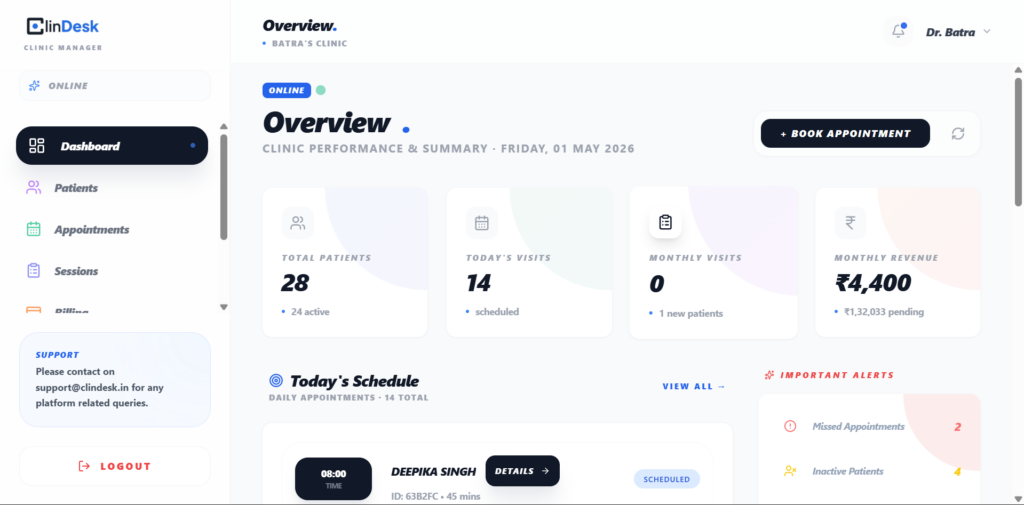
ClinDesk fits best for small private clinics that want scheduling, reminders, notes, and billing in one place. It is especially relevant for clinics that communicate with patients through WhatsApp and want to reduce front-desk workload.
The best way to think about Clindesk is not as a giant hospital system, but as a practical clinic operations tool for smaller teams. That makes it a reasonable fit for physiotherapy practices that want a simpler daily workflow.
Use Clindesk as one example of how a modern clinic system can work. The article should still stay educational and focused on the buyer’s decision process.
How to compare software options
When comparing physiotherapy software, do not compare feature lists alone. Compare how each tool handles the real clinic workflow.
- Can it handle recurring appointments?
- Does it support session packages?
- Are reminders automated?
- Can therapists document care easily?
- Is billing simple?
- Is the software easy for staff to learn?
- Does it suit your country’s workflow and compliance needs?
- Will it actually save time every day?
The right choice is the one your team can adopt quickly and use consistently.
Common mistakes clinics make
A lot of clinics choose software based on price or feature count instead of fit. That often leads to tools that look powerful on paper but are awkward in practice.
Another common mistake is ignoring follow-up behavior. Physiotherapy depends on repeat visits, so if reminders and package tracking are weak, the clinic loses time and revenue.
A third mistake is choosing software that works only for one person in the clinic and not the whole team. A good system should support front-desk staff, therapists, and clinic owners without creating confusion.
When a clinic should upgrade
A physiotherapy clinic should consider upgrading software when appointments are getting missed, the front desk is using too many manual steps, package tracking is messy, notes are scattered, patients are not following through, or revenue is being lost through no-shows or poor coordination.
If those problems already exist, the clinic does not just need software. It needs the best practice management software for physiotherapists built around recurring care.
What good physiotherapy software should improve
Good practice management software should improve the daily work of the clinic in visible ways: fewer missed appointments, faster booking, better patient follow-up, cleaner notes, simpler billing, better therapist coordination, less admin stress, and more consistent patient retention.
If the software does not improve at least a few of these areas, it is probably not the right fit.
FAQs
What is practice management software for physiotherapists?
It is software designed to help physiotherapy clinics manage appointments, notes, billing, reminders, patient records, and recurring sessions in one place.
Why do physiotherapy clinics need specialized software?
Because physiotherapy usually involves multiple visits, treatment plans, and follow-ups, which generic booking tools often do not manage well.
What features are most important for a physio clinic?
Recurring scheduling, package tracking, clinical notes, reminders, billing, and patient history are usually the most important.
Do physiotherapy clinics need EMR software?
Yes, if they want structured treatment notes, progress tracking, and a proper patient record system.
Can WhatsApp be used for physiotherapy reminders?
Yes. In many markets, especially India, WhatsApp is one of the most practical ways to confirm visits and reduce no-shows.
What should a small physiotherapy clinic look for in software?
A small clinic should look for simplicity, recurring appointments, billing, reminders, and fast staff adoption.
How do physiotherapy clinics reduce no-shows?
By using automated reminders, better follow-up, package tracking, and clear appointment confirmations.
Is Clindesk suitable for physiotherapy clinics?
It can be a good fit for small private physio clinics that want reminders, scheduling, notes, and billing in one simple workflow.
How is physiotherapy software different from general clinic software?
Physiotherapy software is better suited to recurring treatment, session packages, progress notes, and long-term patient follow-up.
How should a clinic compare practice management software?
By checking workflow fit, ease of use, billing, reminders, notes, and whether the system works for the clinics’ country and specialty.