
Table of Contents
Empty waiting rooms and overlapping appointments are the two biggest revenue killers for independent healthcare providers. If you run a private practice, figuring out how to reduce patient no-shows and seamlessly manage your calendar is critical to maintaining a profitable, stress-free environment.
When receptionists rely on outdated spreadsheets or manual paper diaries, human error is inevitable. Two patients show up at the exact same time, or worse, a slot remains empty because a patient forgot their appointment. This disrupts your workflow, frustrates your staff, and heavily impacts your bottom line.
In this comprehensive guide, we will explore seven highly effective strategies to prevent double-booking and ensure your patients arrive on time using modern private practice management tools.
The Hidden Financial Impact of Missed Appointments
Before implementing solutions, it is important to understand the true cost of an unorganized schedule. Every time a patient misses an appointment without warning, you lose the consultation fee. You also lose the opportunity to treat someone on your waitlist who desperately needed that time slot.
Furthermore, when your staff accidentally double-books a time slot, it damages your clinic’s reputation. Patients who are forced to wait 45 minutes because of a scheduling error are far less likely to return or recommend your services. To actively reduce patient no-shows and protect your clinic’s reputation, you must move away from manual tracking and adopt automated systems.
Strategy 1: Prevent Double-Booking with Smart Software
The easiest way to eliminate scheduling conflicts is to remove the possibility of human error entirely. A modern clinic appointment scheduling software will actively block mistakes before they happen, keeping your daily roster perfectly aligned.
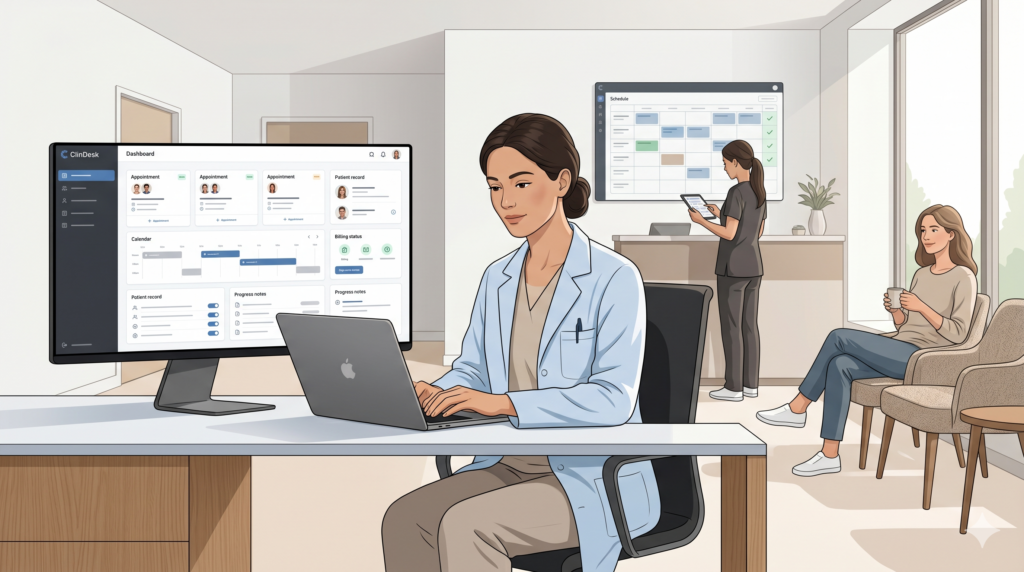
Here is how ClinDesk solves this specific problem for independent practitioners:
- Visual daily planner: See all appointments for the day at a glance, allowing you to instantly spot gaps in your schedule and prepare for incoming patients.
- Smart time slot picker: When booking a new session, the system automatically filters out occupied times and only shows available slots based on the date and the specific treatment duration.
- Double-booking prevention: If a receptionist tries to force an appointment into an occupied slot, the system immediately blocks the action with a real-time conflict alert.
Strategy 2: Utilize Automated Reminder Systems
Patients are busy, and appointments made weeks in advance are easily forgotten. To effectively reduce patient no-shows, communication must be automated.
Instead of having your front desk staff spend hours making phone calls, use software that supports an automated reminder toggle. By sending automated SMS or email reminders 24 to 48 hours before the visit, clinics routinely drop their cancellation rates dramatically. Providing clear patient instructions directly in the appointment notes also ensures the patient arrives prepared for their treatment.
Strategy 3: Enforce a Clear Cancellation Policy
Even with the best software, you need clear boundaries. A well-communicated cancellation policy protects your time and sets expectations.
Require patients to provide at least 24 hours of notice if they need to cancel or reschedule. Make sure this policy is visible on your website, included in your automated reminder emails, and posted physically at your front desk. When patients understand that their missed slot impacts the clinic and other patients, they are much more likely to honor their commitments, which helps reduce patient no-shows over time.
Strategy 4: Collect Partial Payments and Deposits
One of the strongest psychological motivators to ensure a patient shows up is a financial commitment. If a patient has already paid for a portion of their session, they are highly unlikely to skip it.
Using a platform that offers robust billing features allows you to effortlessly collect upfront deposits. Modern systems support partial payment tracking, allowing you to record deposits or installments and automatically track the remaining balance. When a patient books a high-value treatment package, collecting a small deposit secures the slot and filters out uncommitted bookings.
Strategy 5: Optimize Recurring Appointment Scheduling
Many allied health professionals, such as physiotherapists and psychotherapists, rely on treatment packages that require multiple visits. Booking these manually each week leaves room for error and missed slots.
To reduce patient no-shows for long-term treatments, automate the series. Use a system where you can set up Daily, Every N Days, or Custom weekday schedules in one click. Features like auto-termination ensure that the recurring schedule automatically stops after a set number of sessions, keeping your future calendar clean and preventing ghost bookings.
Strategy 6: Monitor Clinic Analytics and No-Show Rates
You cannot fix a problem if you aren’t measuring it. Your clinic needs a clear dashboard to track the outcome of every booked session.
With built-in status tracking, doctors can instantly mark a visit as Present, No-Show, or Cancelled. Over time, a live analytics dashboard will calculate your exact missed-appointment rate. Advanced platforms even provide inactive patient alerts, identifying patients who haven’t visited in a while so you can follow up, effectively plugging leaks in your patient retention funnel.
Strategy 7: Improve the Patient Lifecycle Experience
Finally, understanding your patient’s journey helps tailor your communication. A new patient requires different follow-up care than a regular, long-term patient.
By categorizing visits as New Consultation, Follow-up, or One-Time, you can provide personalized attention. Tracking the full patient lifecycle—from New to Regular to Discharged—ensures that nobody falls through the cracks. Patients who feel actively managed and cared for build stronger loyalty to your clinic, making them far less likely to miss their scheduled appointments.
By adopting these seven strategies and utilizing a smart clinic management platform, you can eliminate administrative chaos and build a highly profitable, efficient healthcare practice.
FAQ Schema Block
Question 1: What is the most effective way to reduce patient no-shows?
The most effective method to reduce patient no-shows is combining automated SMS or email reminders with a clear 24-hour cancellation policy and requiring partial payment deposits for expensive treatments.
Question 2: How does software prevent double booking?
Smart clinic software uses a time slot picker that syncs with a visual daily planner. It automatically hides booked times and actively blocks users from saving conflicting appointments with real-time alerts.
Question 3: Can I track my clinic’s no-show rate automatically?
Yes. Modern private practice management tools feature analytics dashboards that track appointment outcomes, giving you clear date-range reports on your weekly and monthly no-show percentages.